Mark, color and gesture are the three axes that organize the practice.
The mark signals the arrival of a decision. Color fixes an emotional temperature. Gesture transforms physical release into composition.
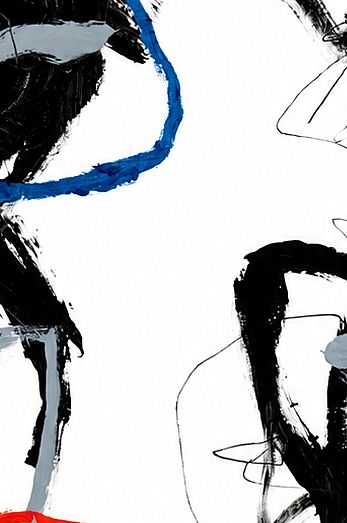
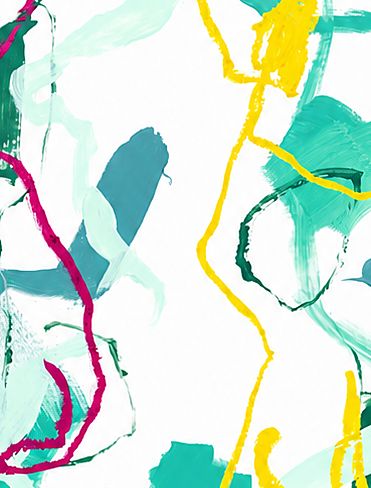
1 m · Works on this page are shown at true relative scale. Hold the cursor over a painting to see its surface.
The mark
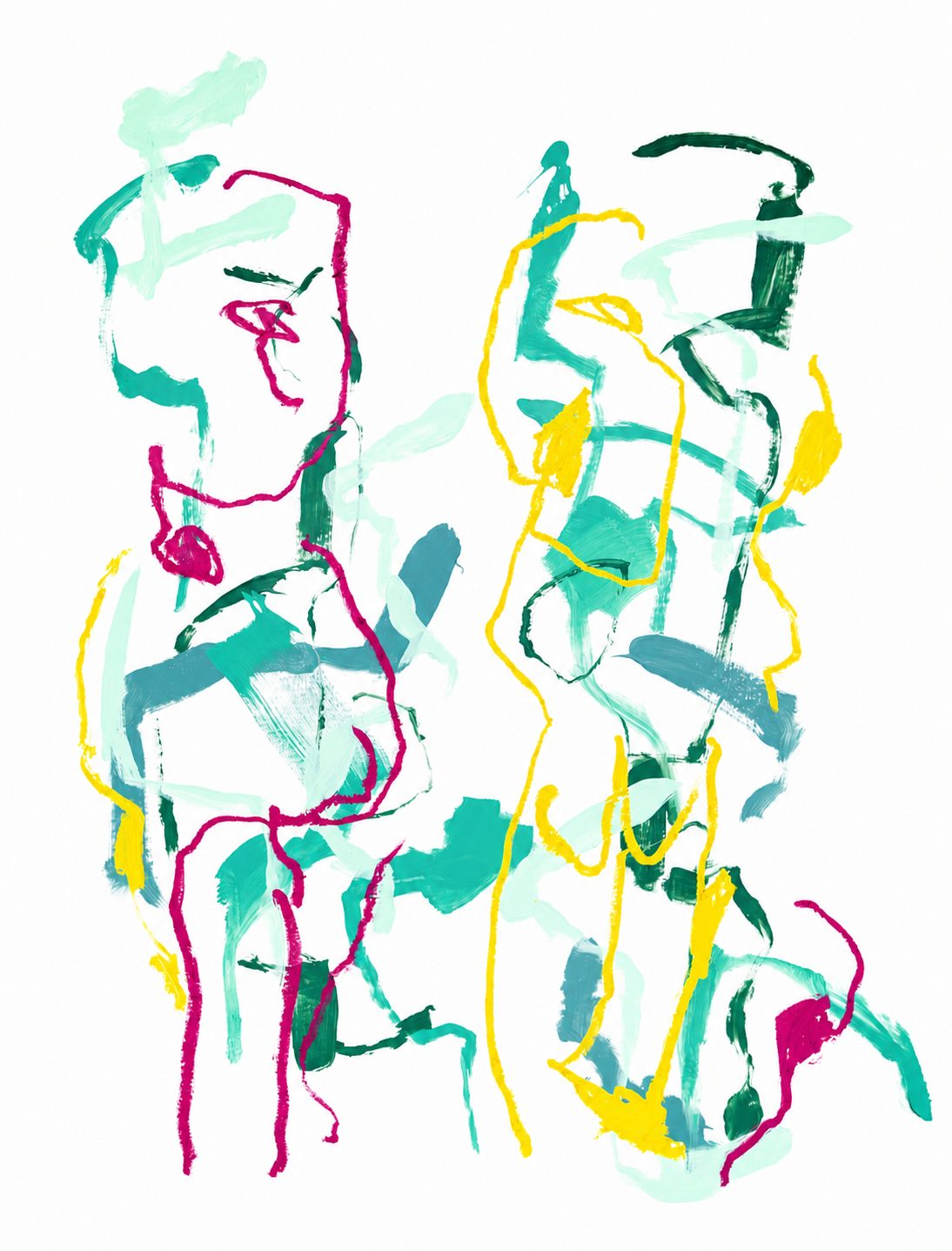
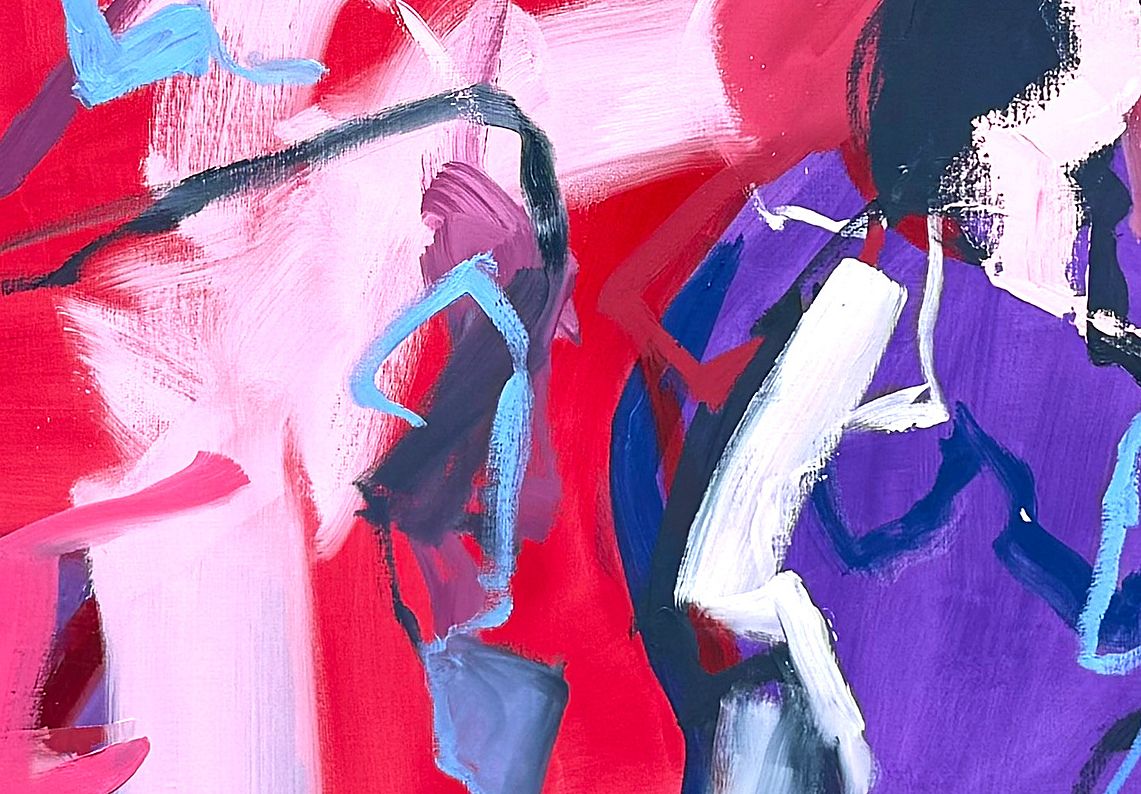
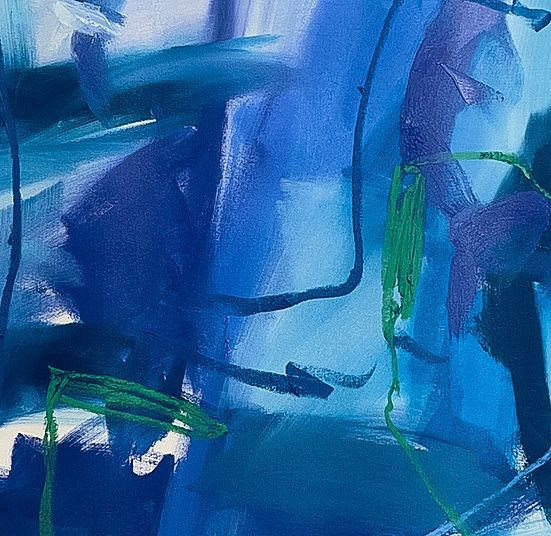
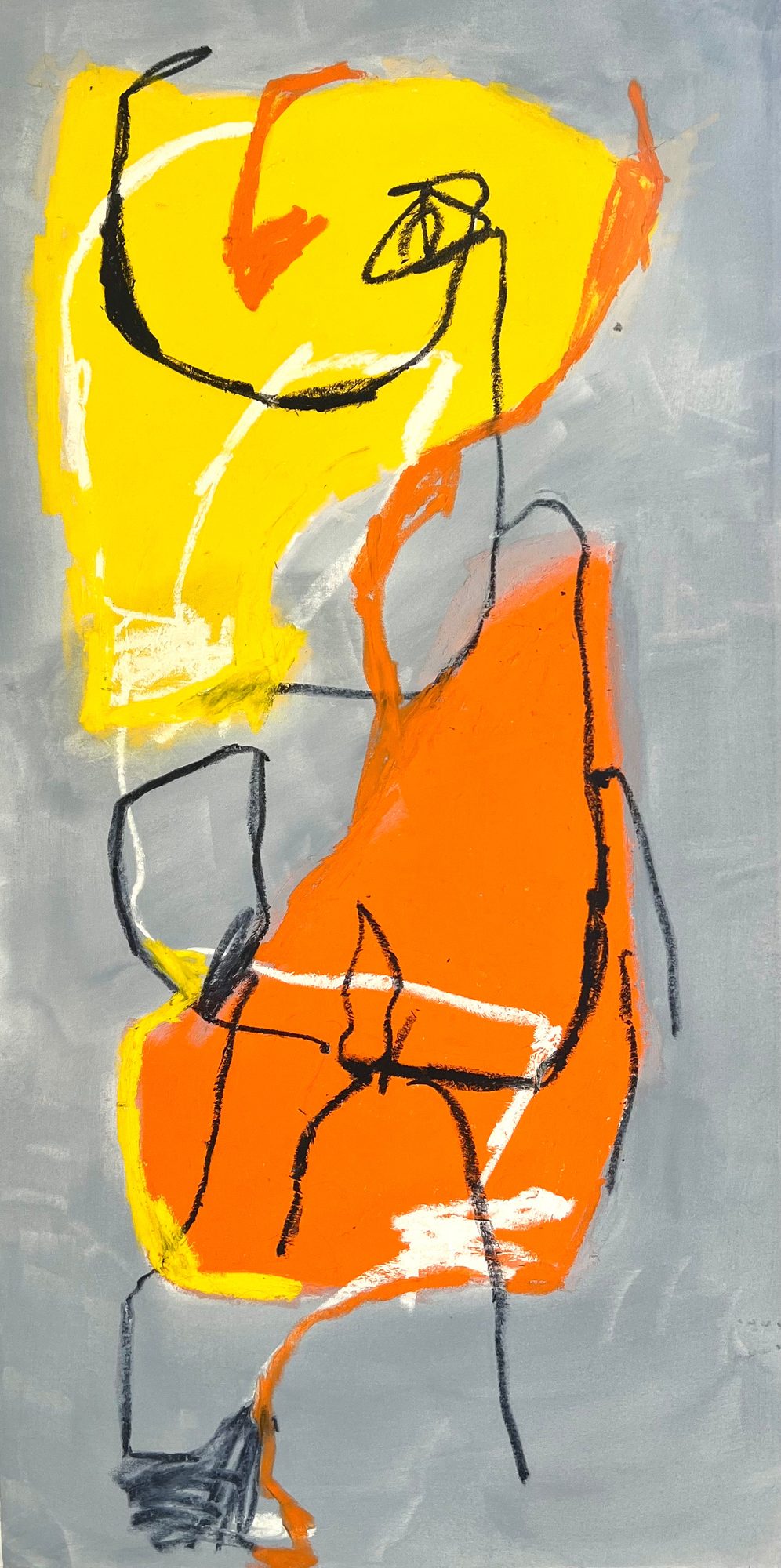
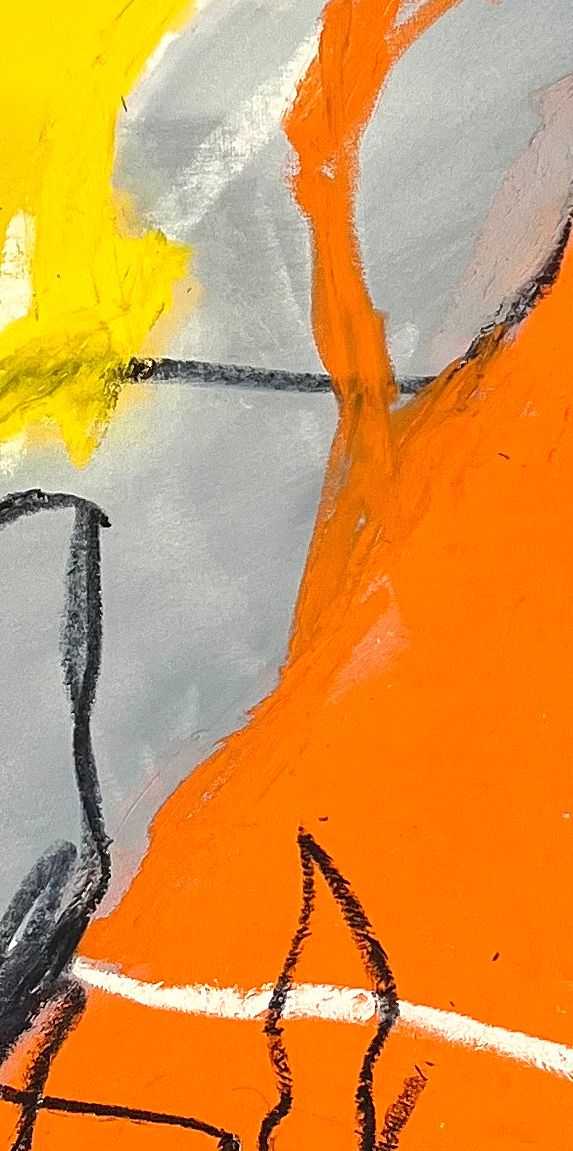
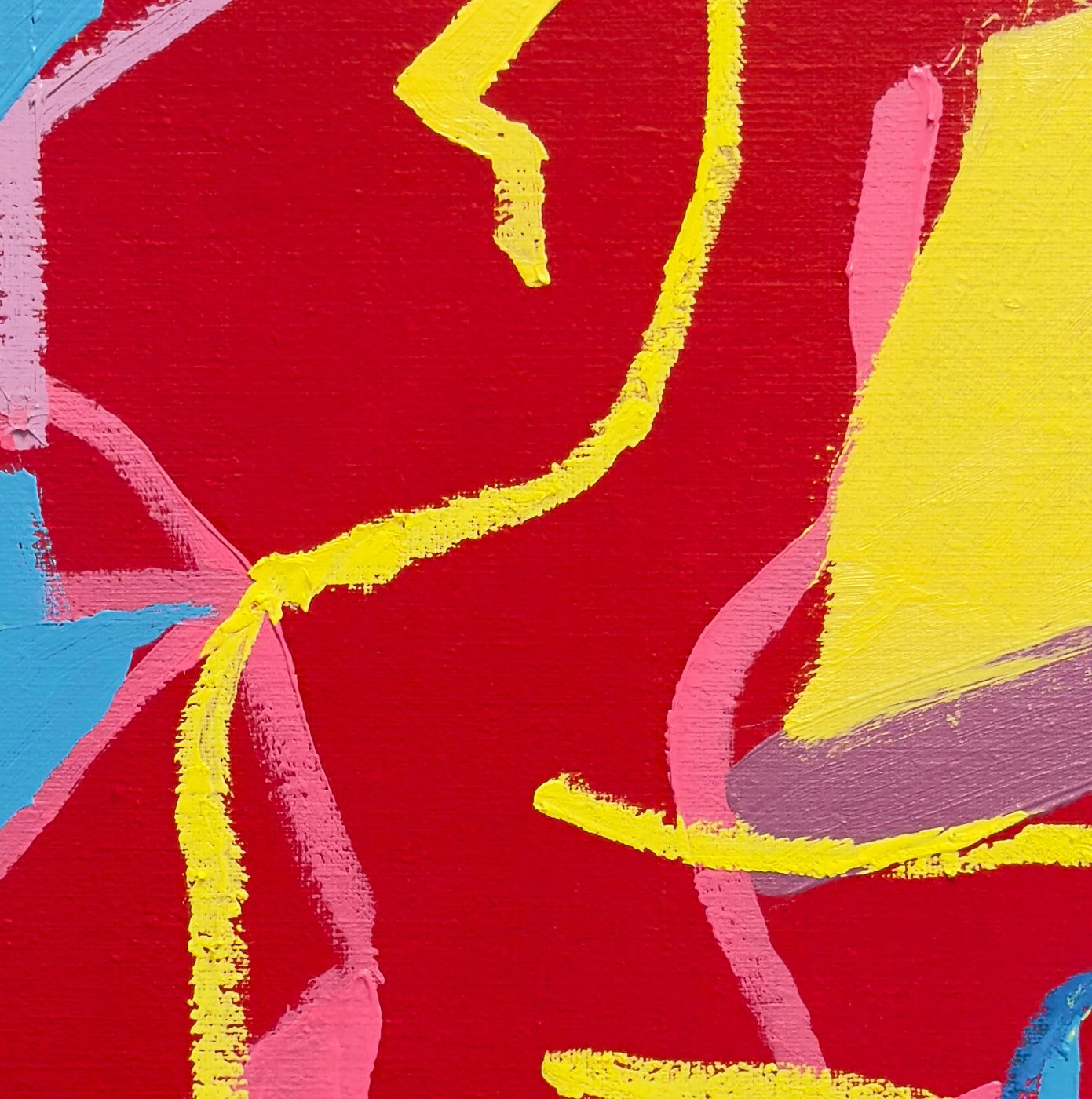
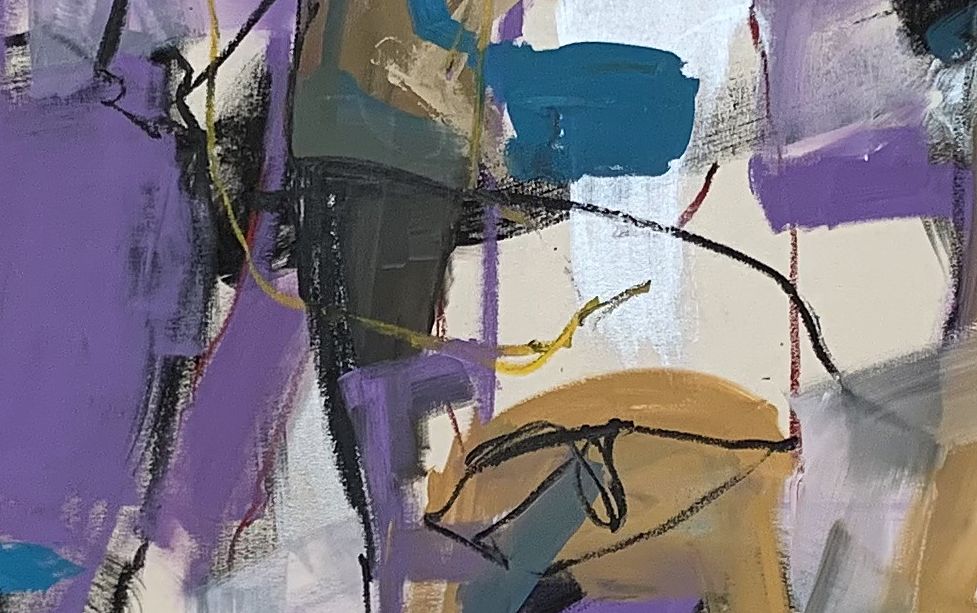
The mark retains the quality of an unrepeatable action. A line enters the surface with its own speed, pressure and degree of tremor. It can suggest a figure, cut through a color field, open a void or destabilize the composition. In every case, it makes the moment of its arrival visible.
Like a note struck on the piano, the mark is inscribed with its intention and its risk. It organizes, interrupts, asserts.
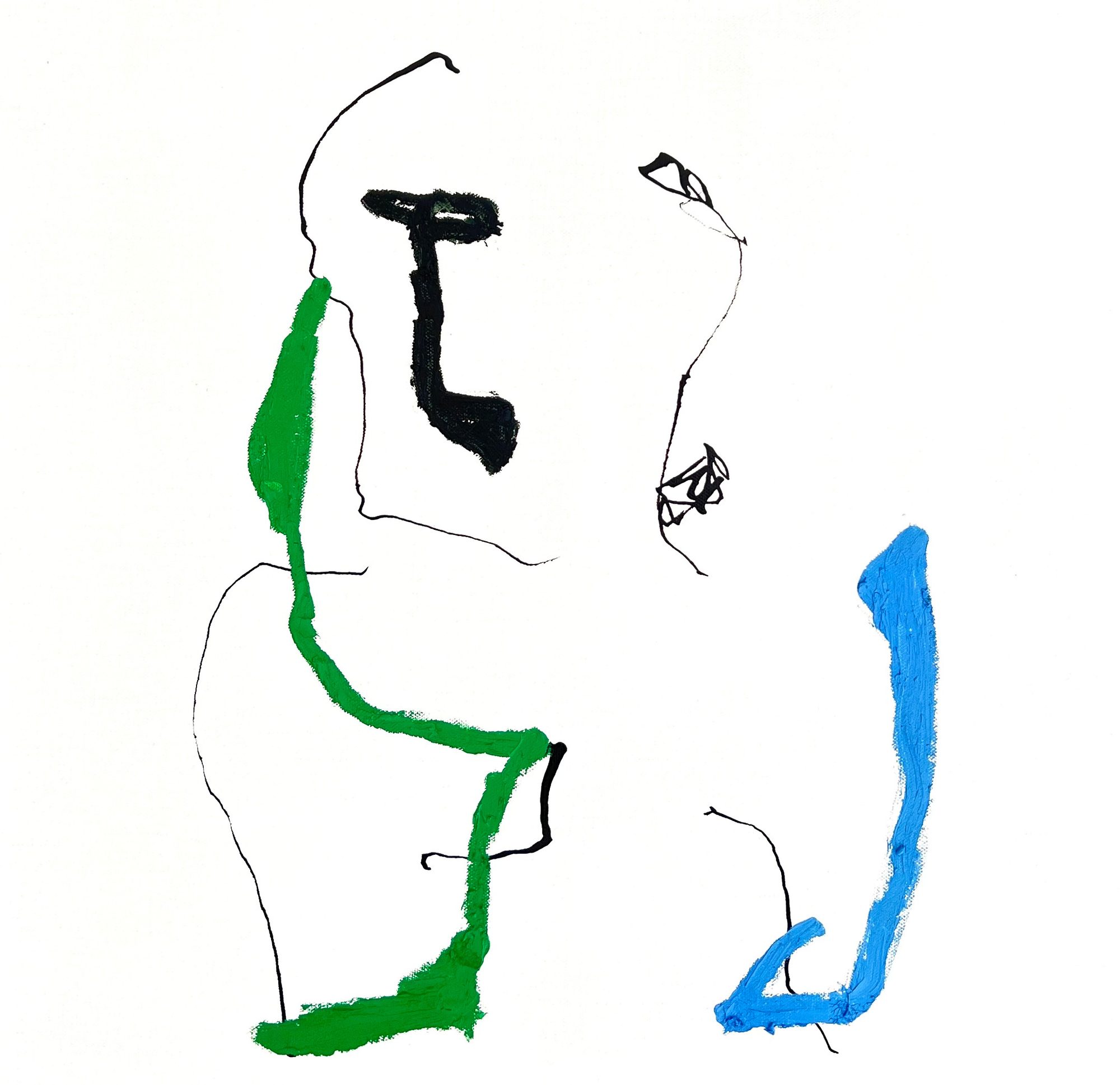
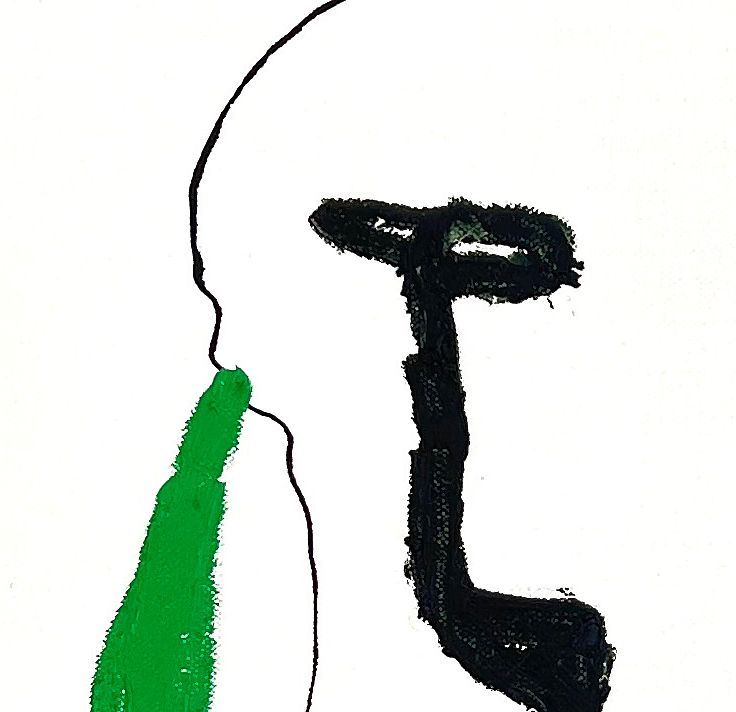
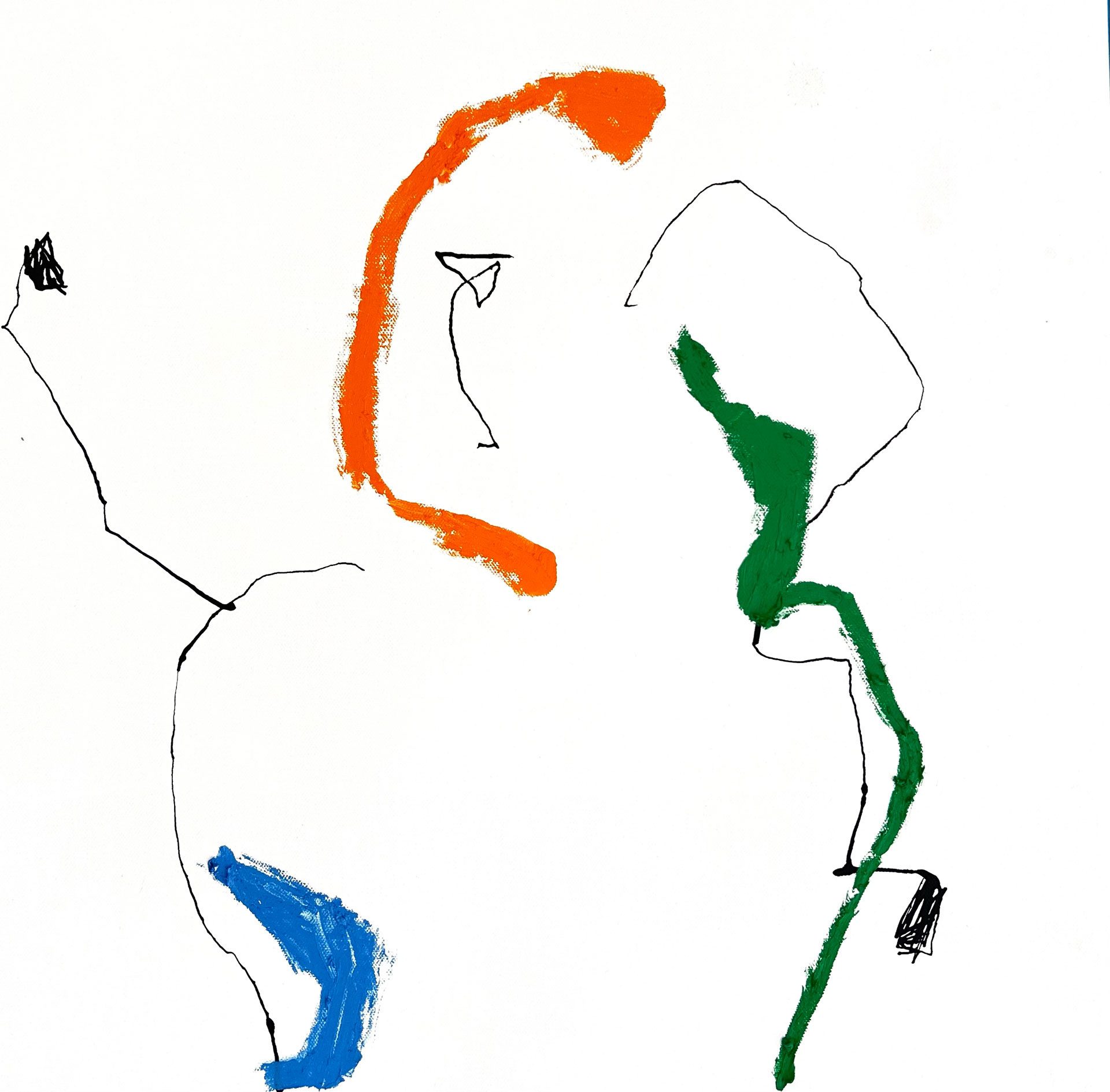
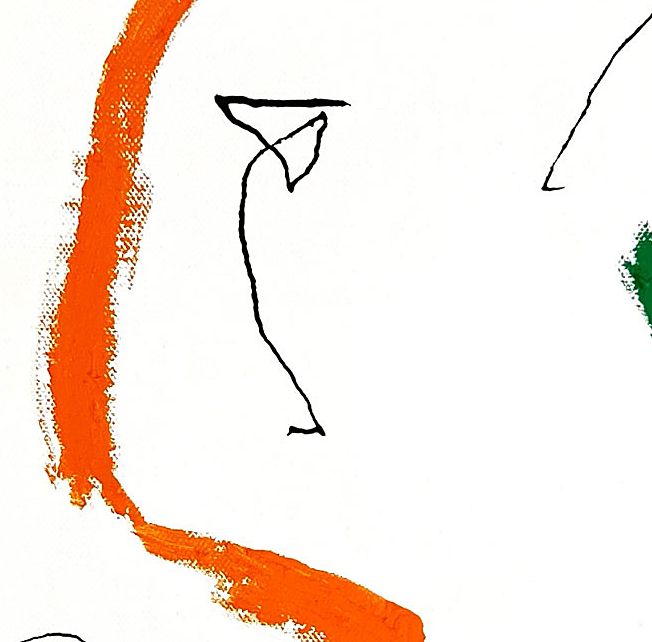

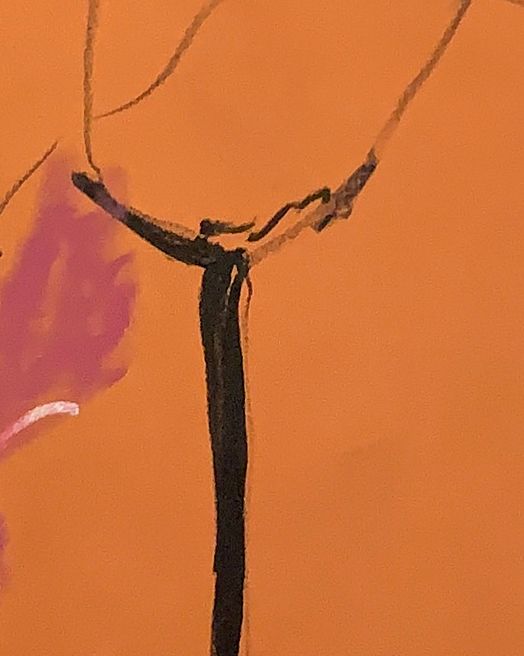
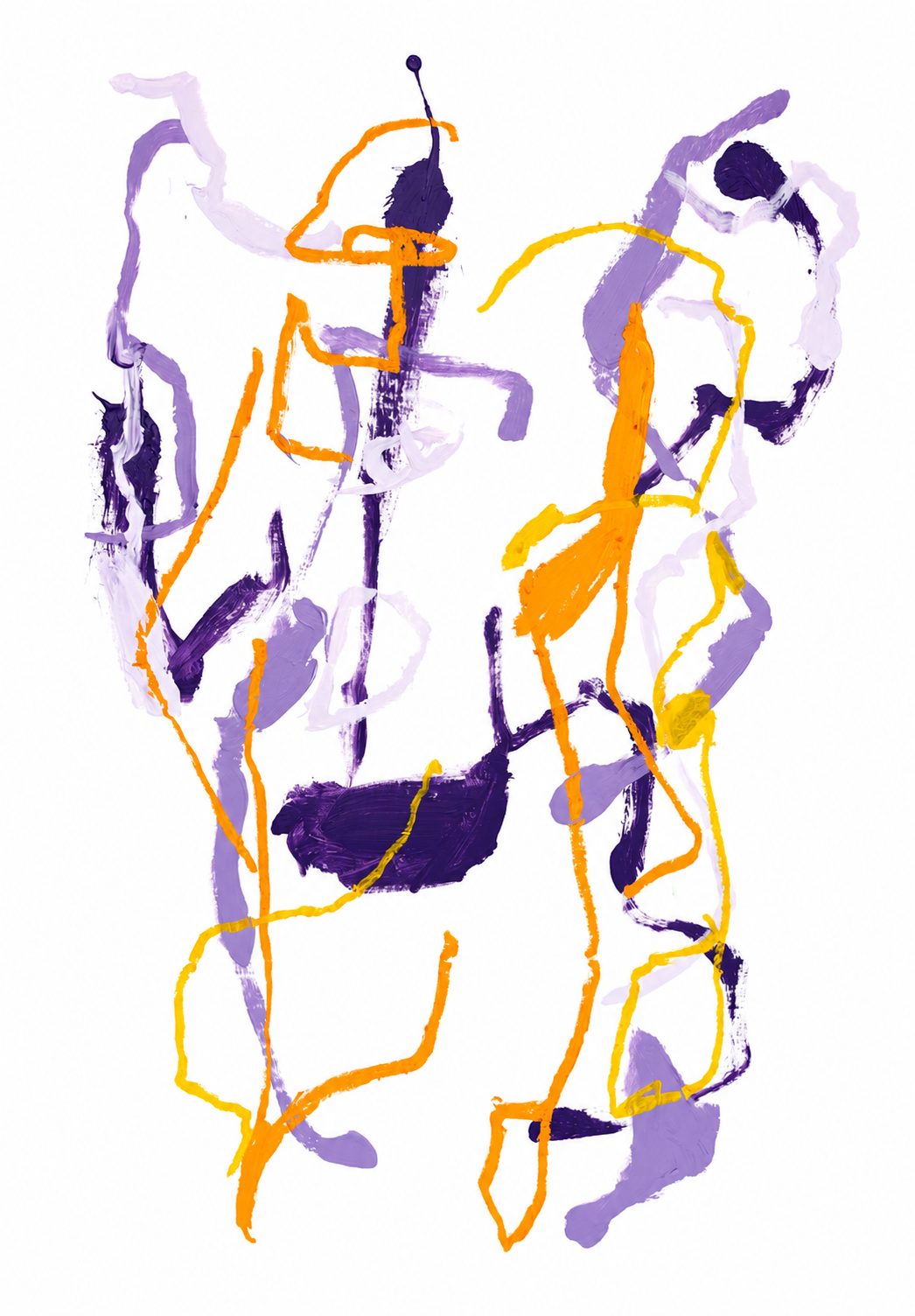
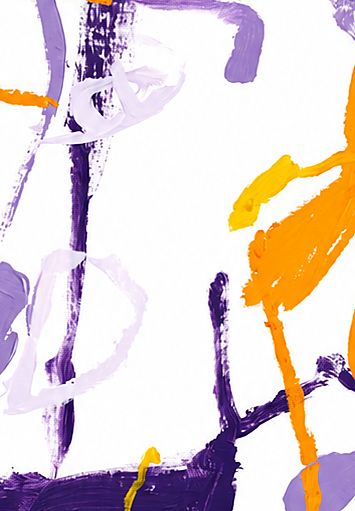
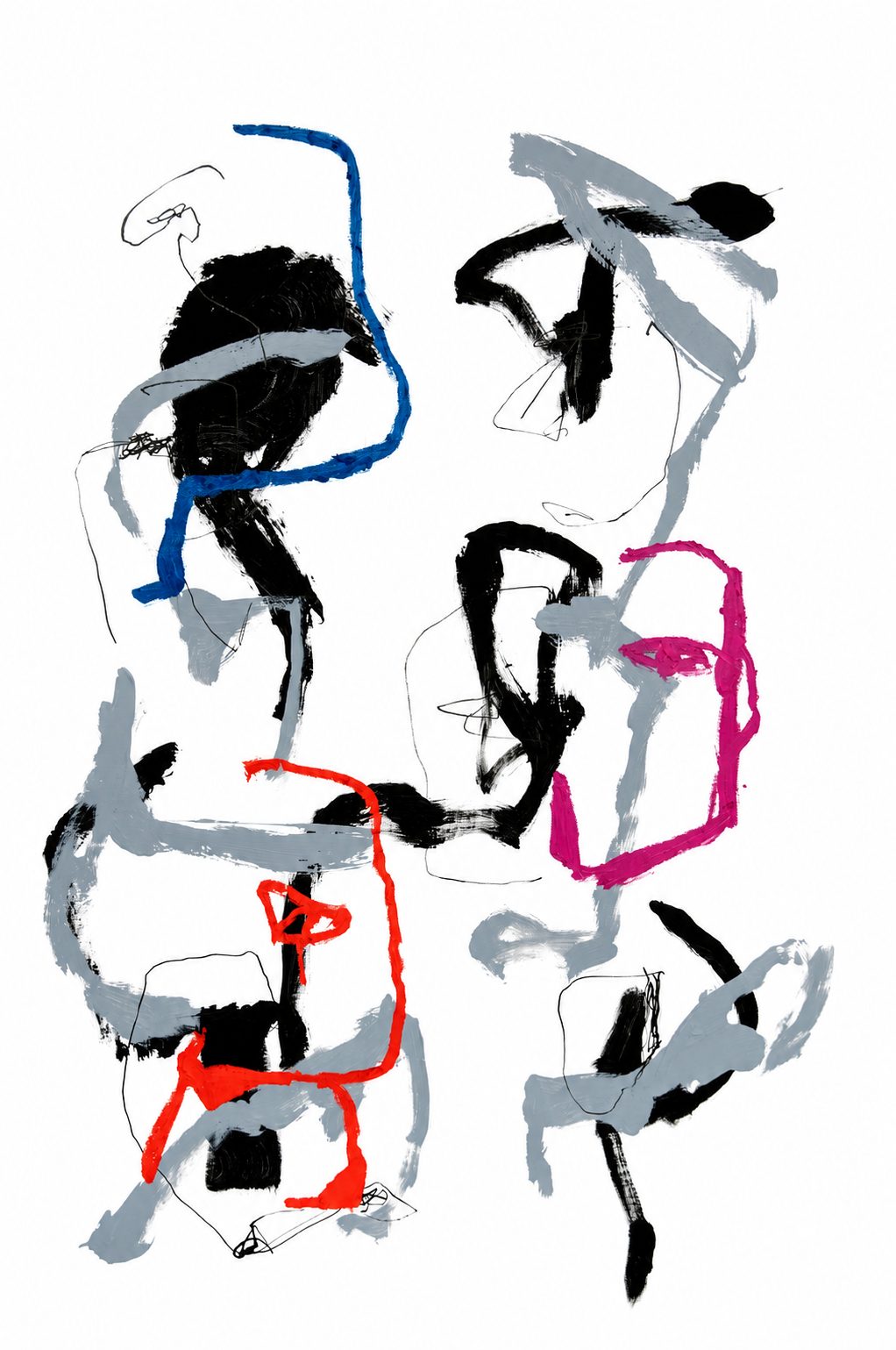
In this practice, error does not exist as a category. What in another context might be corrected becomes, here, the most honest mark of all.
Color
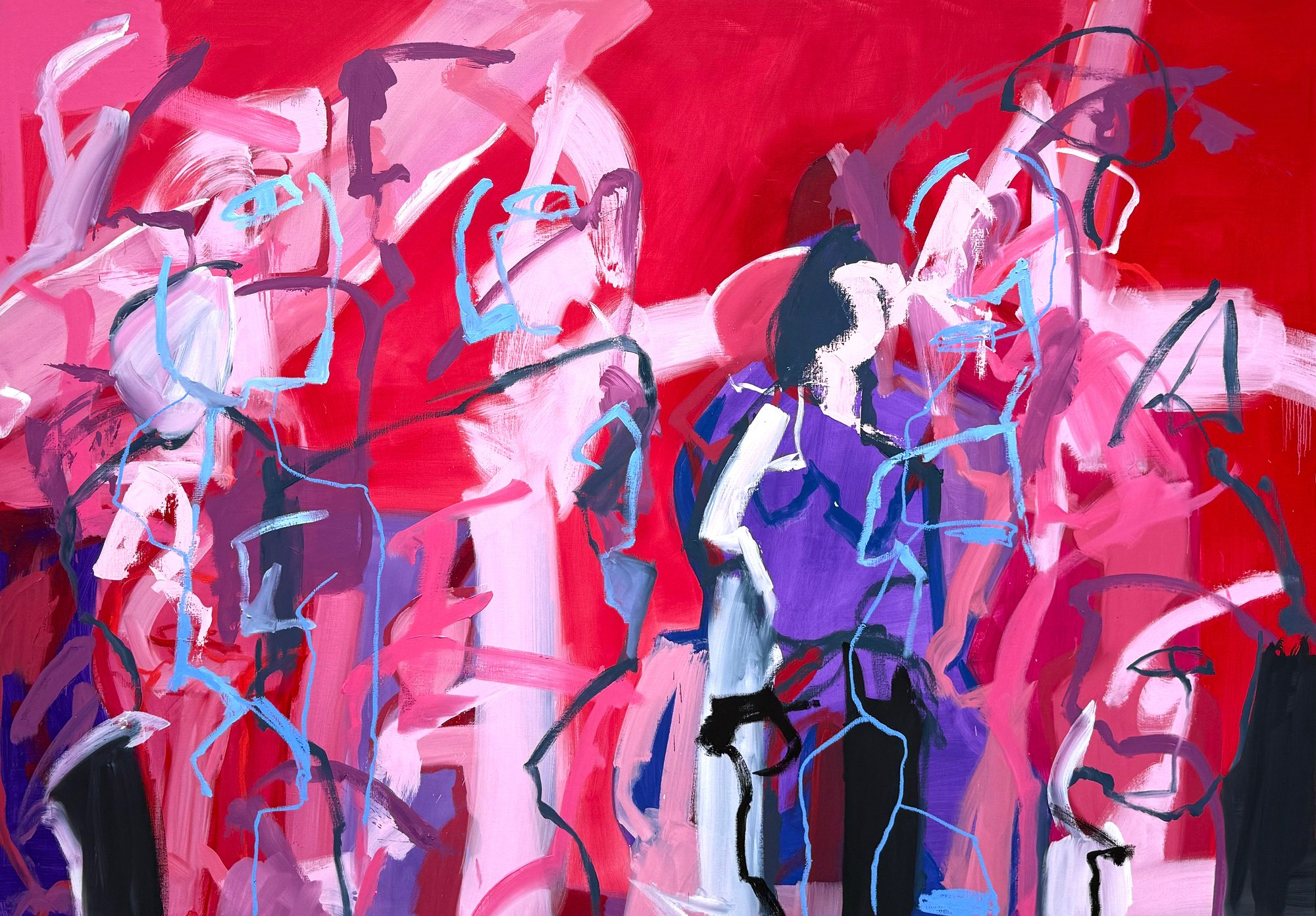
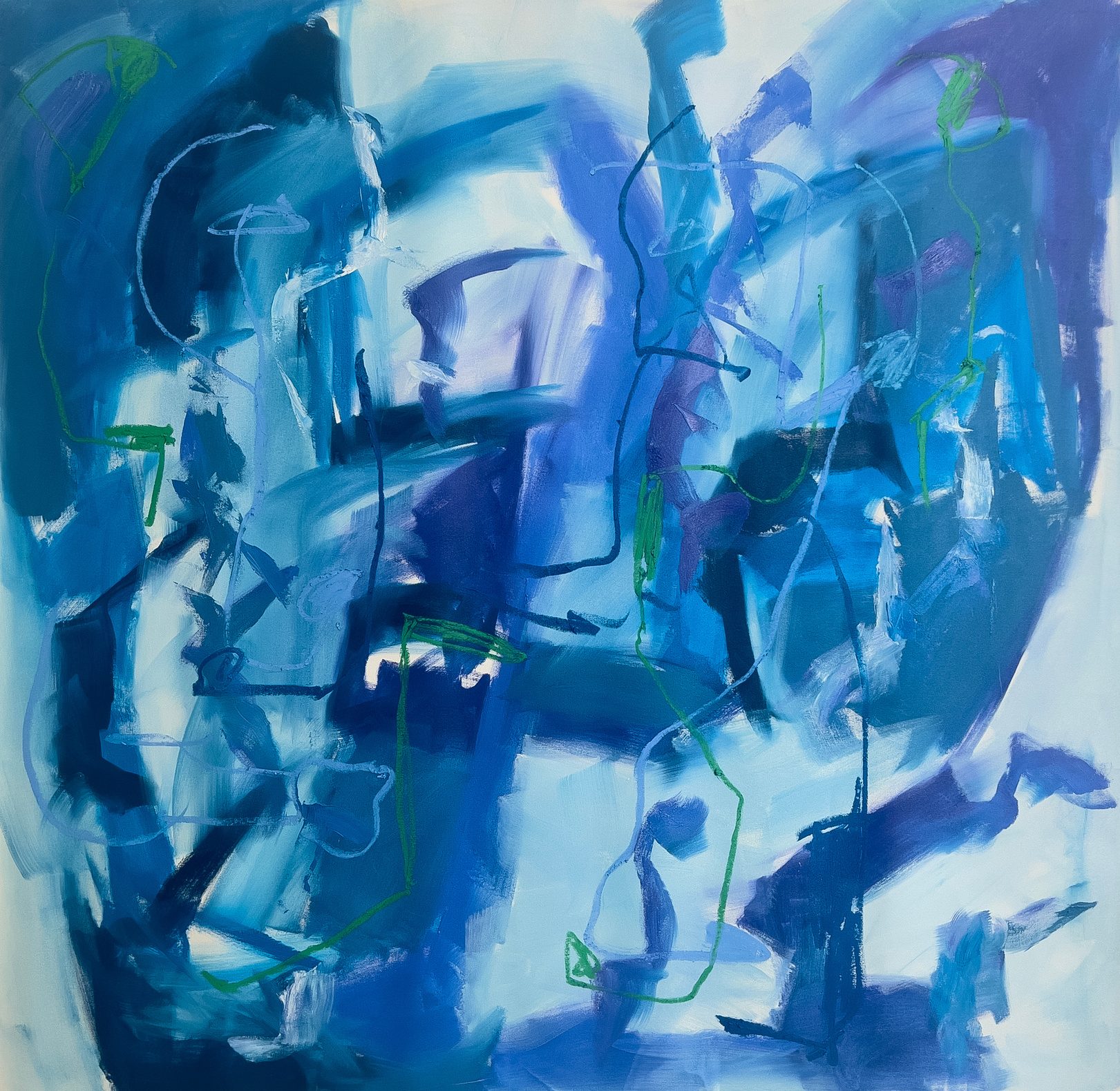
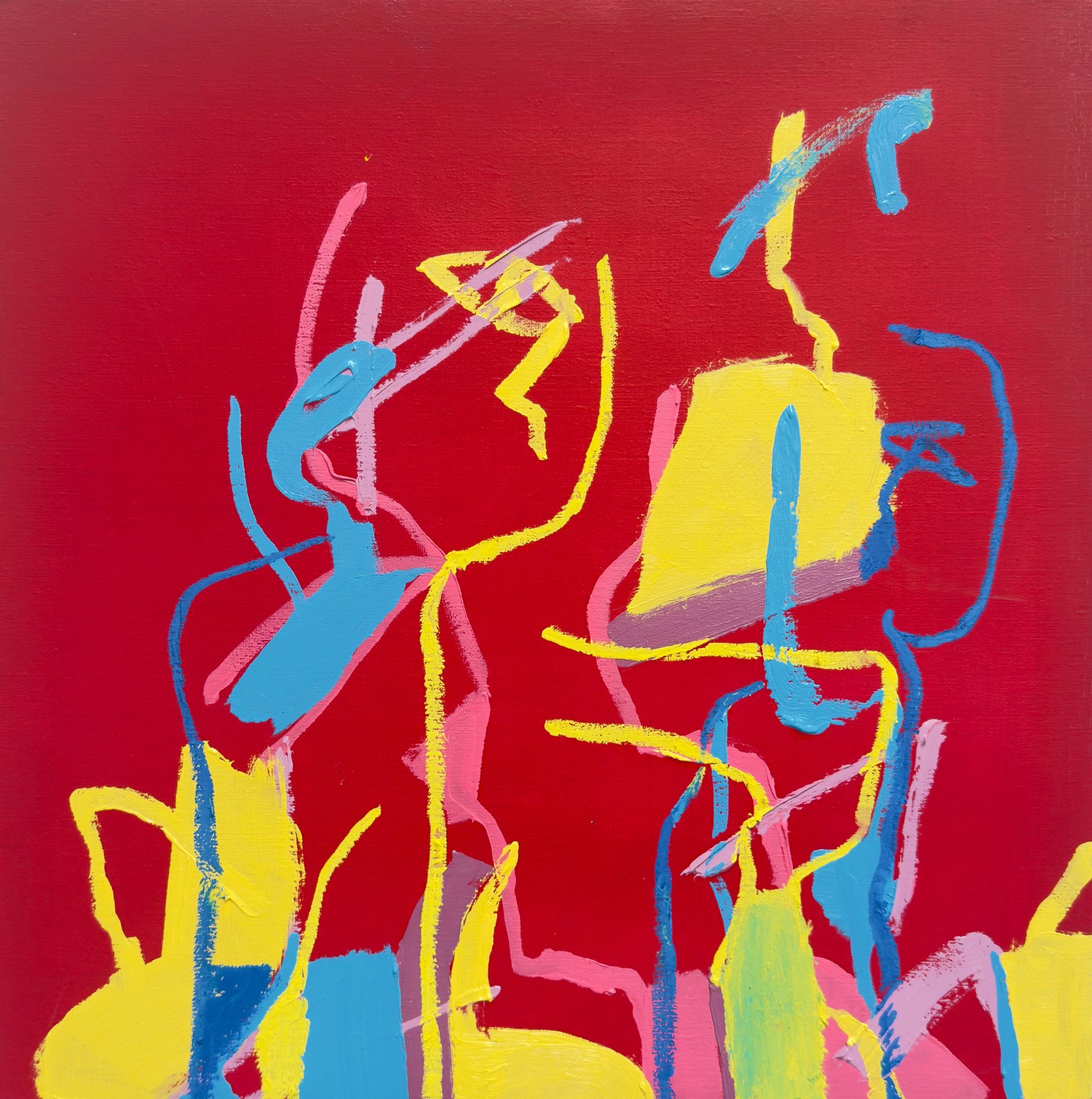
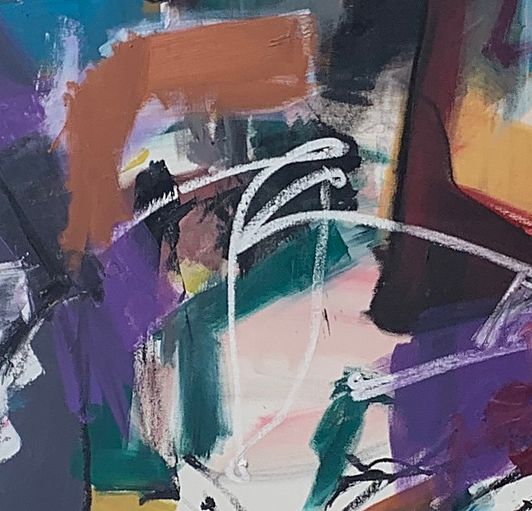
Color builds atmosphere, intensity and emotional weight. Some paintings are dominated by blues, greens, grays or whites that produce containment, distance or silence. Others bring yellows, oranges, pinks, reds and blacks with a more direct energy.
It is not the color that was thought. It is the color that was felt.

Gesture
The piano demands precision within a confined space: the hands move across a fixed field. Painting displaces that energy toward a wider physicality, through the arm, the shoulder, the torso, the step forward or back.
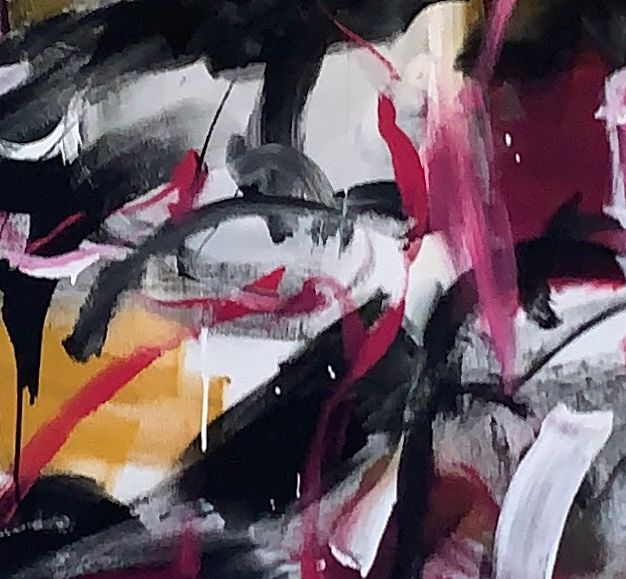
Gesture is where the work becomes most his own: a tension between control and release, craft and vulnerability, form and excess.

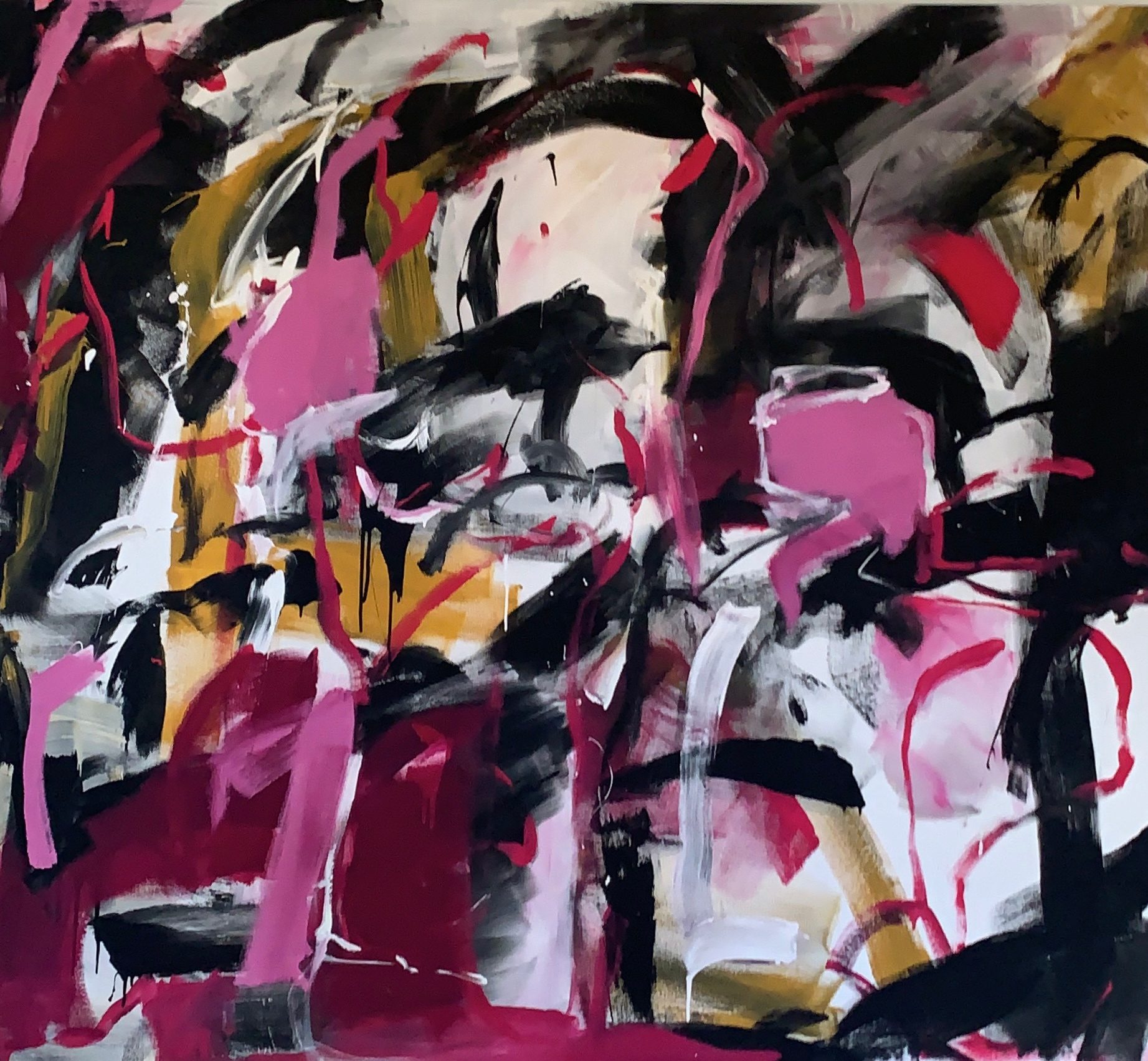
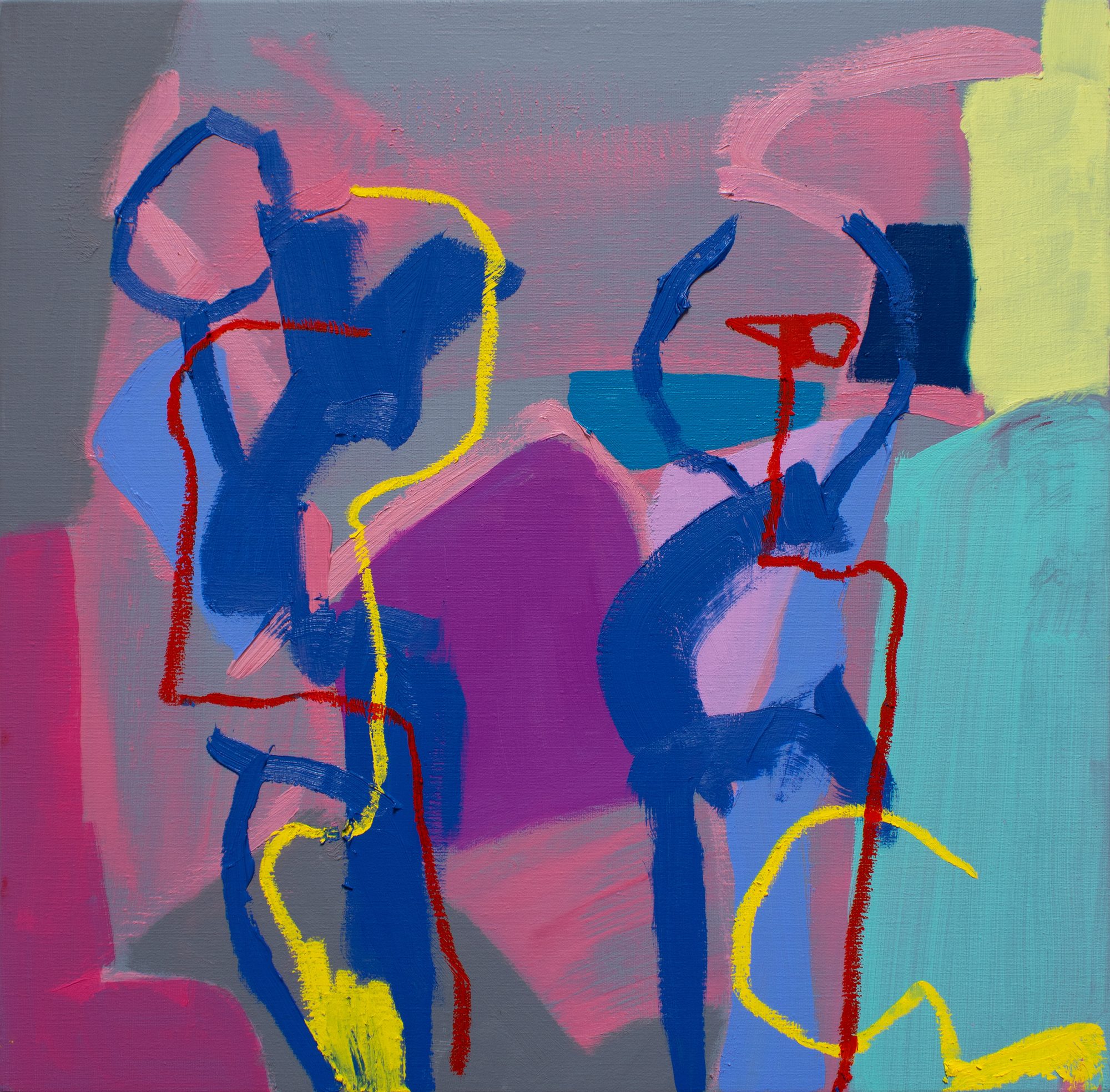
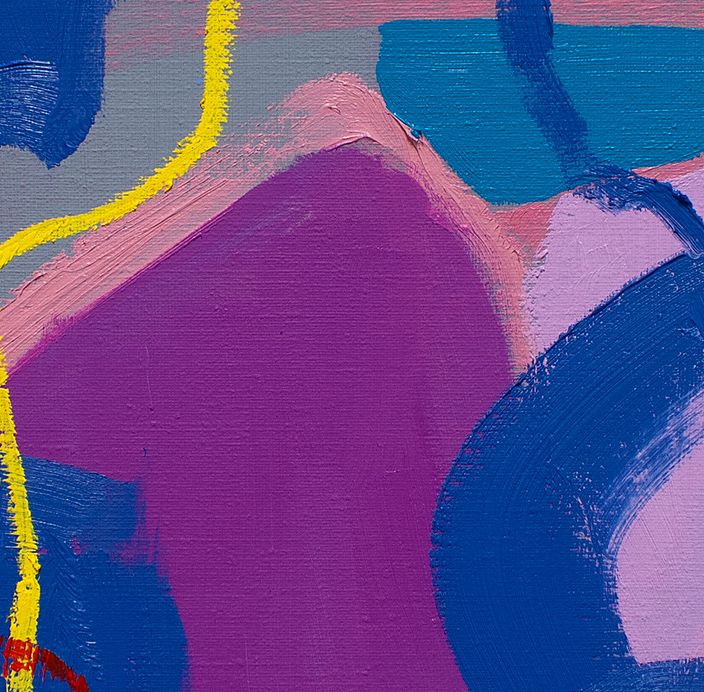
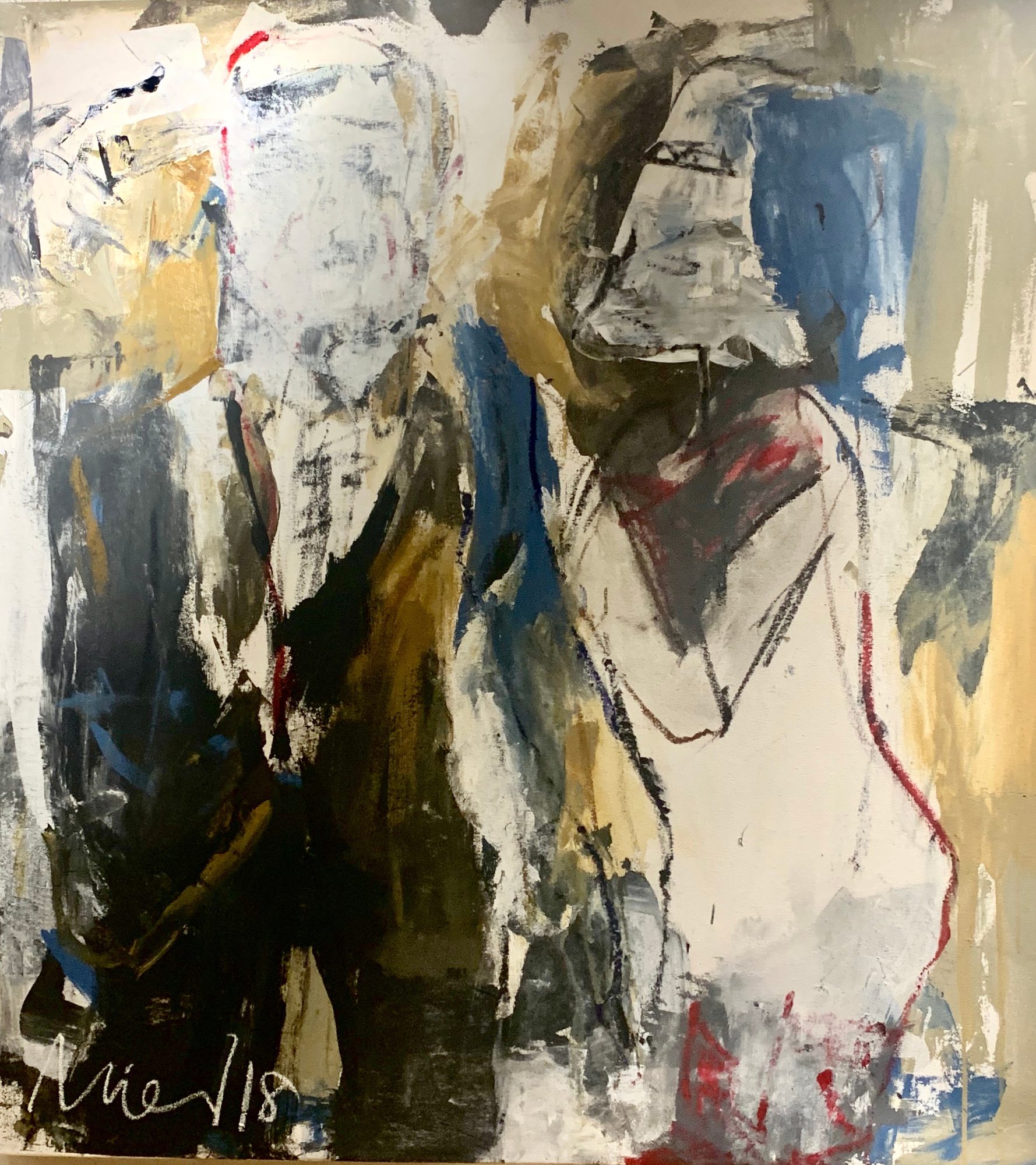
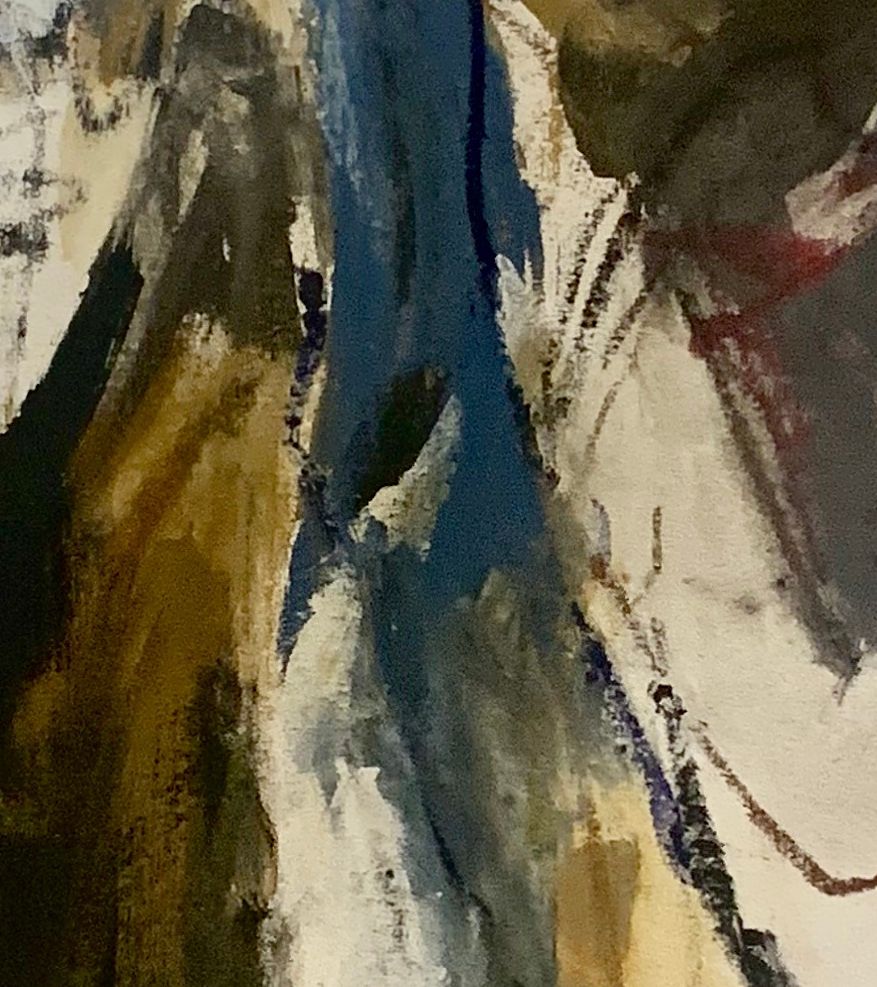
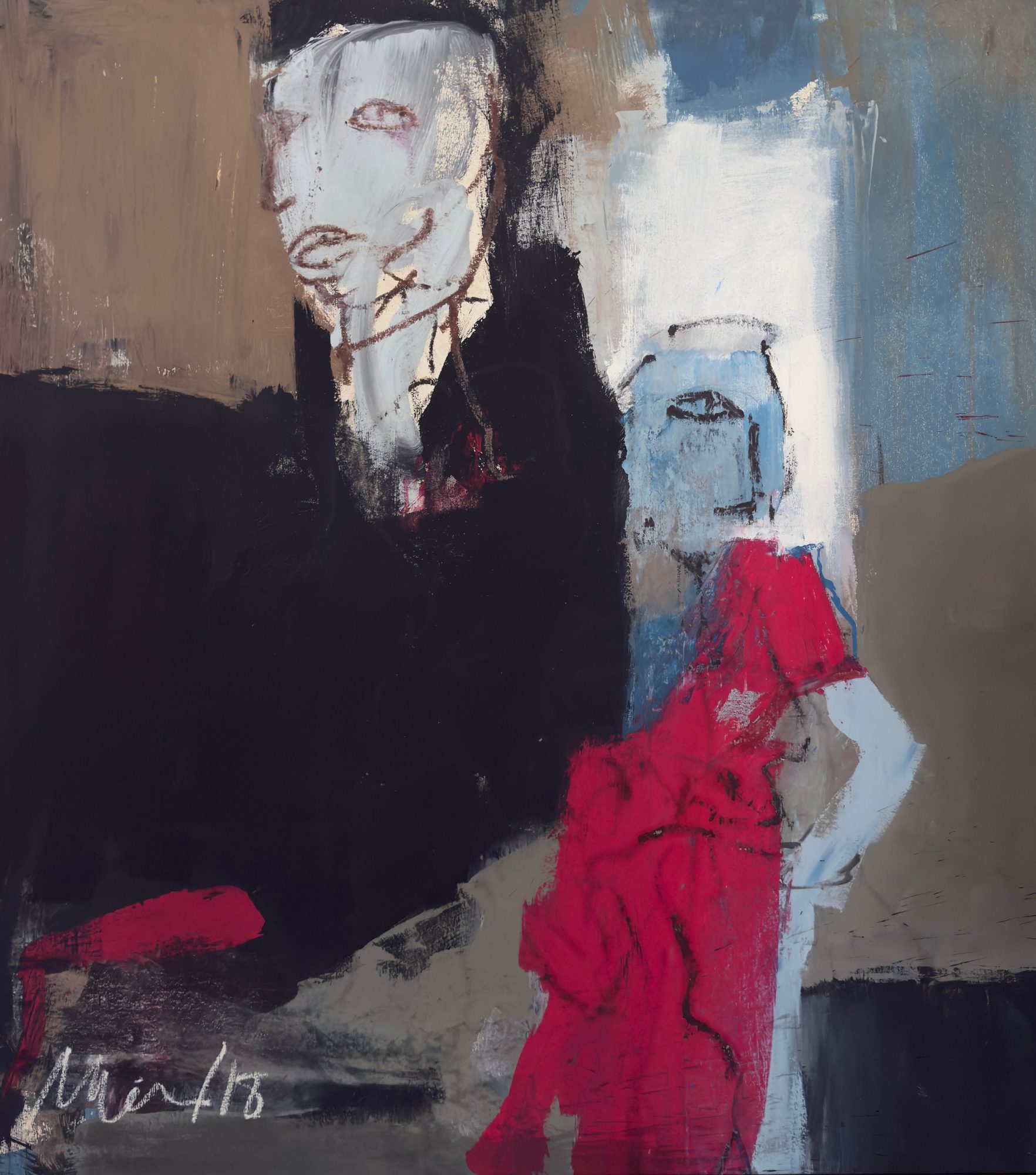
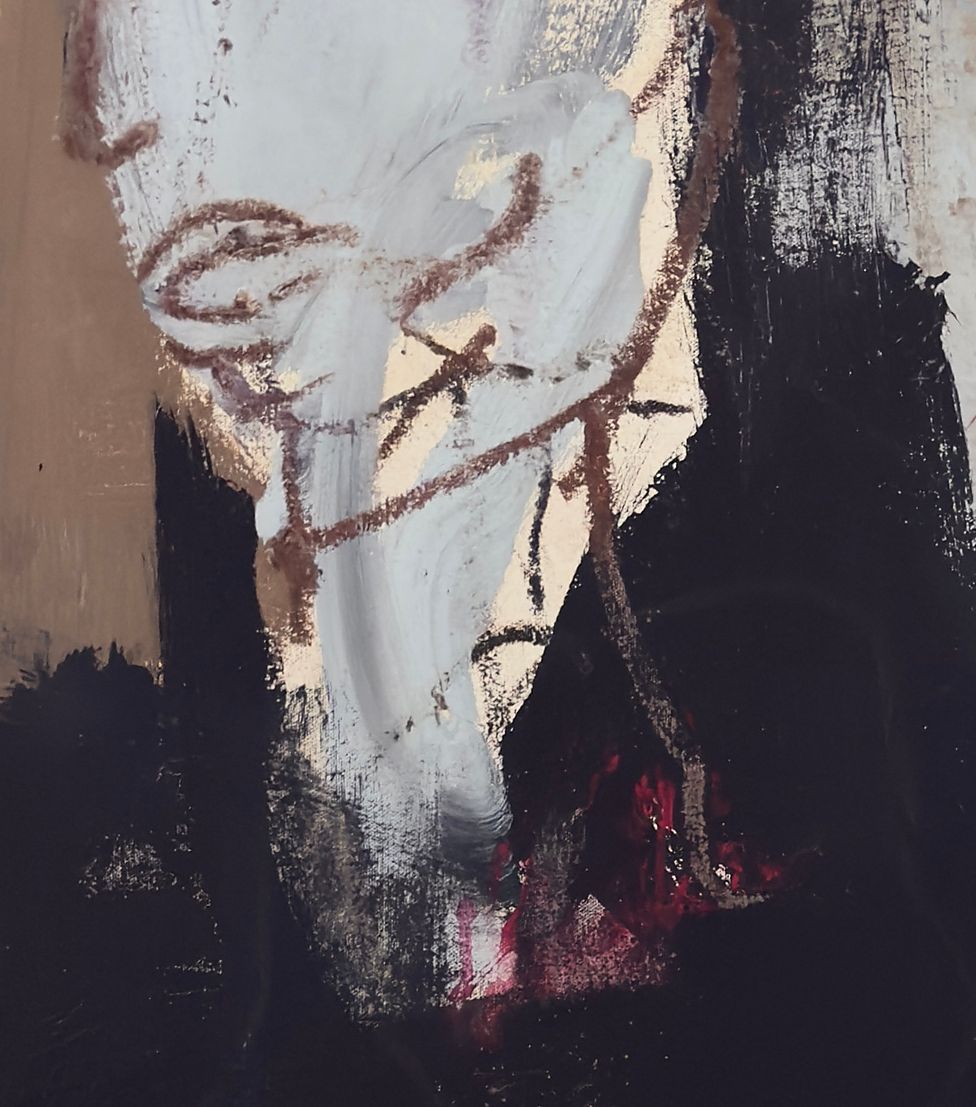
The painting holds the frontier between abstraction and figuration as a permanent condition rather than a problem to solve.
For available works, prices and studio visits in Bogotá, write to the studio.
Request available works